

Published
- 27 min read
Free Cybersecurity Courses and Tutorials
Books by the author
Compare all 5-
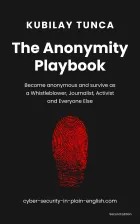
The Anonymity Playbook
Journalists, sources, activists and anyone whose privacy has stakes
-
The Digital Fortress
Anyone protecting their own money, accounts and family online
-
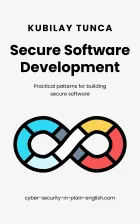
Secure Software Development
Developers shipping production code under delivery pressure
-
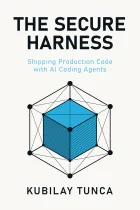
The Secure Harness
Teams running AI coding agents in repositories others depend on
-
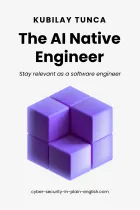
The AI Native Engineer
Engineers taking AI features from a working demo to production

As an Amazon Associate I earn from qualifying purchases. Buying through these links costs you nothing extra and helps pay for the blog.
Introduction
Cybersecurity is an ever-growing field, and developers who want to stay ahead must constantly improve their knowledge and skills. For those on a budget or exploring cybersecurity for the first time, free courses and tutorials offer an excellent starting point. From secure coding practices to ethical hacking techniques, these resources provide invaluable knowledge without the need for expensive subscriptions.
This guide compiles the best free cybersecurity courses and tutorials that developers can use to enhance their skills and build a strong foundation.
Why Learn Cybersecurity for Free?
1. Cost-Effective Learning
Free resources allow you to gain valuable knowledge without financial commitment.
2. Comprehensive Coverage
Many free courses offer in-depth insights into fundamental and advanced cybersecurity topics.
3. Accessible Anytime
Online tutorials and courses are available on demand, allowing you to learn at your own pace.
4. Skill Enhancement
Cybersecurity knowledge complements your development skills, making you a more well-rounded professional.
Top Free Cybersecurity Courses and Platforms
1. Introduction to Cybersecurity by Cisco Networking Academy
Overview: This beginner-friendly course introduces the basics of cybersecurity, including network security and common threats.
Key Topics Covered:
- Understanding cyber threats
- Protecting systems and data
- Careers in cybersecurity
Why Take This Course: It’s a perfect starting point for developers with little to no background in cybersecurity.
Platform: Cisco Networking Academy Access: Introduction to Cybersecurity
2. Cybersecurity Fundamentals by edX (IBM)
Overview: A free course offered by IBM on the edX platform, covering foundational cybersecurity concepts.
Key Topics Covered:
- Threat analysis
- Network security basics
- Cybersecurity careers
Why Take This Course: Learn directly from industry leaders and gain insights into real-world security challenges.
Platform: edX Access: Cybersecurity Fundamentals
3. OWASP Top 10 for Developers by OWASP
Overview: This tutorial series focuses on the OWASP Top 10 security risks, essential for secure application development.
Key Topics Covered:
- Injection attacks
- Broken authentication
- Sensitive data exposure
Why Take This Course: It’s tailored for developers aiming to build secure applications and mitigate vulnerabilities.
Platform: OWASP Official Website Access: OWASP Top 10
4. Ethical Hacking for Beginners by Cybrary
Overview: An introductory course on ethical hacking, offering insights into penetration testing and vulnerability assessment.
Key Topics Covered:
- Penetration testing basics
- Network scanning tools
- Exploitation techniques
Why Take This Course: Learn practical hacking skills that help secure your applications.
Platform: Cybrary Access: Ethical Hacking for Beginners
5. Google IT Support Professional Certificate (Cybersecurity Module)
Overview: A comprehensive program that includes a cybersecurity module, focusing on protecting systems and data.
Key Topics Covered:
- Network defense strategies
- Identifying and mitigating threats
- Incident response basics
Why Take This Course: Learn directly from Google experts and gain practical insights.
Platform: Coursera (Free trial available) Access: Google IT Support Certificate
6. Introduction to Defensive Security by TryHackMe
Overview: An interactive platform offering hands-on labs for learning defensive security techniques.
Key Topics Covered:
- Secure system configurations
- Monitoring and logging
- Responding to attacks
Why Take This Course: Provides practical, scenario-based training to solidify your knowledge.
Platform: TryHackMe Access: Defensive Security
7. PortSwigger Web Security Academy
Overview: The Web Security Academy is a completely free, online training platform built and maintained by PortSwigger — the team that creates Burp Suite, the most widely used web application security testing tool in the industry. It combines comprehensive written lessons with interactive, browser-based labs that simulate real vulnerabilities in realistic web applications.
Key Topics Covered:
- SQL injection (16 hands-on labs)
- Cross-site scripting — 30 labs covering reflected, stored, and DOM-based variants
- Cross-site request forgery (CSRF) and clickjacking
- Server-side request forgery (SSRF) and XML external entity (XXE) injection
- Authentication vulnerabilities and OAuth 2.0 flaws
- Business logic vulnerabilities
- HTTP request smuggling and web cache poisoning
- Insecure deserialization and path traversal
- API security testing and web LLM attacks
Why Take This Course: No other free resource rivals the Web Security Academy for web application security depth and breadth. The content is authored and continuously updated by the same researchers who discover cutting-edge vulnerabilities in real systems. Labs run inside your browser without requiring any local setup — just create a free account and start working through them. Completing a significant portion of the lab catalog is widely recognized as a strong signal for roles in penetration testing, bug bounty hunting, and application security review. The Academy covers emerging topics like web LLM attacks and web cache deception as they become relevant, so the material never goes stale.
Platform: PortSwigger (Web Security Academy) Access: Web Security Academy
8. Google Cybersecurity Certificate (Coursera — Audit for Free)
Overview: Google’s Cybersecurity Professional Certificate on Coursera spans eight courses and covers the full security analyst workflow, from understanding foundational threats to automating security tasks with Python scripts. Google designed this certificate for people entering security with no prior background, but its practical depth makes it equally valuable for developers looking to formalize their security thinking.
Key Topics Covered:
- Foundations of cybersecurity and the security mindset
- Risk management using NIST Cybersecurity Framework and ISO standards
- Network security architecture, protocols, and hardening techniques
- Linux command-line fundamentals for security operations
- SQL for querying and filtering security logs
- Threat detection and incident response using SIEM tools (Splunk, Chronicle)
- Automating security workflows with Python scripting
- Career preparation for security analyst roles
Why Take This Course: Unlike many beginner courses that remain purely theoretical, this certificate finishes with you writing actual Python code and operating inside enterprise security tools. The Python automation module is particularly valuable for developers who already code — it frames security scripting directly in terms of skills you already possess, lowering the learning curve substantially. Coursera lets you audit every course in the certificate for free, granting full access to all video lectures and readings. Graded assignments and the shareable certificate require either a paid subscription or a financial aid application, which Coursera typically approves.
Platform: Coursera (Google) Access: Google Cybersecurity Certificate
9. ISC2 Certified in Cybersecurity (CC) — Free Self-Paced Course
Overview: ISC2 — the organization behind the globally recognized CISSP certification — offers a completely free self-paced online course that prepares learners for the entry-level Certified in Cybersecurity (CC) exam. The course is structured around five security domains that align directly to the exam blueprint and reflect how the industry organizes security knowledge.
Key Topics Covered:
- Security principles: confidentiality, integrity, and availability (the CIA triad)
- Incident response, business continuity, and disaster recovery planning
- Access control concepts, models, and physical security
- Network security fundamentals: firewalls, VPNs, intrusion detection systems
- Security operations and continuous monitoring
Why Take This Course: ISC2 launched this initiative as part of a commitment to certify one million security professionals and lower the barrier to entry for the field. For developers, the value is not just exam preparation — the course instills a structured, risk-based mindset for thinking about security that directly improves design decisions during software development. Even if you never sit the exam, the conceptual framework you build here will change how you evaluate trade-offs between security, usability, and development speed in your everyday work.
Platform: ISC2 (direct enrollment) Access: ISC2 CC Course
10. OpenSecurityTraining2 (OST2)
Overview: OpenSecurityTraining2 is a community-maintained platform offering rigorous, technically deep free training taught by practicing security engineers and researchers. It succeeds the original OpenSecurityTraining.info project, which built a reputation for some of the most thorough free security training available anywhere. OST2 updates that legacy with modern tooling and fresh course material from active practitioners.
Key Topics Covered:
- System architecture and firmware security fundamentals
- Malware analysis: dynamic and static analysis techniques
- Reverse engineering software at the binary level
- Hardware security and trusted computing concepts
- Exploitation techniques and vulnerability research methodology
Why Take This Course: OST2 occupies a niche that almost no other free resource addresses: low-level, technically rigorous training that explains how systems behave at the hardware and operating system level. Developers who want to understand how buffer overflows actually manifest in memory, how malware achieves persistence across reboots, or how professional reverse engineers analyze unknown binaries will find material here that goes far beyond what any introductory or intermediate course provides. The instructors are active security researchers whose expertise is evident at every level of the curriculum. The entire platform is free and the community is engaged and supportive.
Platform: OpenSecurityTraining2 Access: OST2
11. Cryptography I by Stanford University (Coursera — Audit Free)
Overview: Professor Dan Boneh’s Cryptography I course at Stanford University is one of the most respected free cryptography courses available. It builds the mathematical and conceptual foundations of modern cryptography from first principles — explaining not only how cryptographic algorithms work but why they are designed the way they are, where they break down, and what the right engineering patterns look like.
Key Topics Covered:
- Stream ciphers, block ciphers, and their modes of operation (ECB, CBC, CTR, GCM)
- Message authentication codes (MACs) and cryptographic hash functions
- Authenticated encryption and AEAD construction
- Key exchange protocols and Diffie-Hellman foundations
- Public-key cryptography (RSA, ElGamal)
- Digital signatures and certificate basics
Why Take This Course: Most developers interact with cryptography through high-level library calls without understanding what is happening underneath — and that knowledge gap leads directly to serious vulnerabilities. Using AES in ECB mode, misusing initialization vectors in GCM, building custom HMAC-like constructions, or generating weak keys are all real, actively exploited patterns that stem from insufficient cryptographic understanding. This course builds the conceptual foundation needed to make sound decisions about cryptographic implementation and to critically evaluate whether a library or protocol is being used correctly. Professor Boneh is an exceptional teacher who makes mathematically involved material genuinely accessible.
Platform: Coursera (Stanford University) Access: Cryptography I
12. Introduction to Cloud Security (AWS Skill Builder — Free Tier)
Overview: AWS Skill Builder provides a substantial catalog of free digital training, including foundational and intermediate courses on cloud security. These courses cover AWS-specific services and patterns, but the underlying concepts — the shared responsibility model, identity and access management, encryption, and network segmentation — apply equally to Azure, GCP, and any other cloud environment.
Key Topics Covered:
- Shared responsibility model: what the cloud provider secures versus what you own
- Identity and Access Management (IAM): users, roles, policies, and the principle of least privilege
- Data protection: encryption at rest and in transit using KMS and TLS
- Security monitoring and auditing with CloudTrail and AWS Config
- Network security: VPCs, security groups, network ACLs, and private subnet design
- Compliance frameworks and cloud governance basics
Why Take This Course: Cloud misconfigurations have become one of the most prevalent sources of data breaches across all industries. A staggering proportion of high-profile incidents trace back to publicly exposed storage buckets, overly permissive IAM roles, or unencrypted data stores — all issues rooted in developers not fully understanding their security responsibilities in a cloud environment. AWS free training is concise, practical, and directly applicable to infrastructure decisions you make as a developer or architect every sprint. Even developers primarily working with Azure or GCP benefit from the core concepts taught here, since the underlying security patterns are consistent across cloud providers.
Platform: AWS Skill Builder Access: AWS Free Digital Training
Top Free Tutorials and Learning Resources
1. YouTube Channels
NetworkChuck
Focuses on cybersecurity, networking, and ethical hacking tutorials. Channel Link: NetworkChuck
The Cyber Mentor
Offers free lessons on penetration testing and application security. Channel Link: The Cyber Mentor
John Hammond
Known for detailed walkthroughs of hacking challenges and CTFs. Channel Link: John Hammond
2. Interactive Platforms
Hack The Box (Free Tier)
A platform for practicing penetration testing in a controlled environment. Website: Hack The Box
OverTheWire Wargames
Learn Linux and cybersecurity basics through gamified challenges. Website: OverTheWire
Free Courses by Specialty Category
Not all free cybersecurity training is created equal, and the best resource for you depends on your current role and where you want to grow. The following breakdown organizes the courses in this guide — and a few additional resources — by the security specialty most relevant to developers.
Web Application Security
Web security is the most immediately relevant domain for the majority of developers. Whether you build APIs, single-page applications, or full-stack web services, the vulnerabilities that put your users at risk live in the code you write every day.
Best free resources for web application security:
- PortSwigger Web Security Academy — The gold standard for web security training. Covers every major web vulnerability class with dozens of interactive labs. Start here if you build anything that runs in a browser or exposes HTTP endpoints.
- OWASP Top 10 — Read the official OWASP documentation alongside any web security course. It frames vulnerabilities in terms of risk, prevalence, and business impact — exactly how security-conscious organizations prioritize their remediation work.
- TryHackMe — Web Fundamentals Path — A gentler on-ramp for developers new to web security concepts, covering HTTP fundamentals, authentication flaws, and common injection attacks in a guided, gamified format.
The progression in this category should move from understanding individual vulnerability classes conceptually → exploiting them in controlled labs → reviewing your own codebase for those same patterns. That cycle — learn, exploit, apply — is what turns abstract awareness into genuine skill.
Cloud Security
Cloud security has become inseparable from application security as organizations migrate infrastructure to AWS, Azure, and GCP. Developers who provision infrastructure through code — using Terraform, CloudFormation, or Pulumi — need security literacy across both the application and infrastructure layer to avoid creating vulnerabilities at the infrastructure level even when the application code is sound.
Best free resources for cloud security:
- AWS Skill Builder — Free foundational cloud security courses covering IAM, encryption, and network security patterns specific to AWS.
- Google Cloud Skills Boost — Offers free courses on Google Cloud security fundamentals, including IAM, data protection, and infrastructure hardening. Several learning paths include temporary lab credits to practice in real GCP environments.
- TryHackMe — Attacking and Defending AWS Path — Hands-on practice attacking and defending AWS configurations, including IAM privilege escalation, EC2 exploitation, Lambda security, and storage misconfigurations.
- Microsoft Learn — Free Azure security learning paths covering Azure Active Directory, Microsoft Defender, and security operations across Azure environments.
Cryptography
Cryptography is the mathematical backbone of nearly every security control in modern software: HTTPS, password hashing, digital signatures, and data encryption all depend on cryptographic primitives being used correctly. Most security disasters involving cryptography are not failures of the algorithms themselves but failures of implementation — developers using the right library incorrectly.
Best free resources for cryptography:
- Cryptography I by Dan Boneh (Stanford / Coursera) — Rigorous introduction to symmetric and asymmetric cryptography. Strongly recommended for developers with a mathematical background who want to truly understand what their crypto libraries are doing.
- Cryptopals Challenges (cryptopals.com) — A free, self-guided set of programming challenges that teach cryptography by breaking real cryptographic implementations. If you learn better by doing than by reading, the Cryptopals track is one of the most effective free resources in this entire guide.
- OWASP Cryptographic Storage Cheat Sheet — A concise, free reference that covers which algorithms to use, which to avoid, and how to implement them correctly in real applications.
Ethical Hacking and Penetration Testing
Understanding how attackers operate radically improves every defensive decision you make as a developer. Ethical hacking training teaches you to think offensively — a perspective that is invaluable when reviewing code, designing authentication flows, or evaluating the effectiveness of security controls.
Best free resources for ethical hacking:
- TryHackMe — Jr Penetration Tester Path — A structured, gamified path covering penetration testing methodology, reconnaissance, exploitation, and reporting. The free tier provides access to most of the core content.
- Hack The Box — Starting Point — Free beginner machines that introduce penetration testing concepts through guided, hands-on exploitation scenarios.
- Cybrary — Ethical Hacking for Beginners — A video-based introduction to ethical hacking methodology and core tools that is suitable for developers with no prior offensive security background.
DevSecOps and Secure Development
DevSecOps — integrating security practices into every stage of the development lifecycle — is where most organizational security investment is currently heading. Developers who understand how to embed security into CI/CD pipelines, container builds, and infrastructure-as-code are increasingly differentiated in the job market and within their teams.
Best free resources for DevSecOps:
- TryHackMe — DevSecOps Path — Covers CI/CD pipeline security, securing infrastructure-as-code, container security with Docker and Kubernetes, and applying DevSecOps frameworks in real development workflows.
- OWASP DevSecOps Guideline — Free, comprehensive documentation on integrating SAST, DAST, software composition analysis (SCA), and secrets scanning into development pipelines.
- SANS Free Resources — SANS publishes free security posters, whitepapers, and recorded webinars on DevSecOps practices at sans.org/security-resources — a useful supplement to any structured course.
Comparing Free Cybersecurity Courses at a Glance
With so many resources available, choosing where to start can feel overwhelming. The tables below organize the courses in this guide to help you make a quick, informed decision based on your current skill level, available time, and primary interest.
By Skill Level and Time Commitment
| Course | Skill Level | Estimated Time | Best For |
|---|---|---|---|
| Cisco Intro to Cybersecurity | Beginner | 15 hours | Complete newcomers |
| ISC2 CC Self-Paced Course | Beginner | 14 hours | Structured foundations |
| Google IT Support (Cybersecurity module) | Beginner | ~10 hours | Developer context |
| OWASP Top 10 | Beginner–Intermediate | Self-paced | Web developers |
| TryHackMe Defensive Security | Beginner | 8–12 hours | Practical orientation |
| Google Cybersecurity Certificate | Beginner–Intermediate | 6 months (part-time) | Career changers / developers |
| Cybrary Ethical Hacking | Beginner–Intermediate | 12–15 hours | Offensive basics |
| Cryptography I (Stanford) | Intermediate | 23 hours | Cryptographic literacy |
| AWS Cloud Security (Skill Builder) | Intermediate | 6–10 hours | Cloud developers |
| PortSwigger Web Security Academy | Intermediate | 100+ hours | Web security depth |
| OpenSecurityTraining2 | Intermediate–Advanced | Varies | Low-level / research |
By Platform and Access Model
| Platform | Cost | Certificate | Hands-On Labs |
|---|---|---|---|
| Cisco Networking Academy | Free | Yes | Yes |
| edX (IBM) | Free to audit | Paid upgrade | No |
| Coursera (Google, Stanford, IBM) | Free to audit | Paid upgrade | Some |
| OWASP | Fully free | No | No |
| Cybrary | Free tier | No (free tier) | Limited |
| TryHackMe | Free tier | Paid upgrade | Yes |
| PortSwigger Web Security Academy | Fully free | No | Yes |
| ISC2 | Fully free | Exam fee required | No |
| AWS Skill Builder | Free tier | Some free | Sandbox labs |
| OpenSecurityTraining2 | Fully free | No | No |
Real-World Impact of Free Cybersecurity Learning
Example 1: Transitioning to Security Roles
A developer used Cybrary’s ethical hacking course to gain skills that enabled a successful transition to a penetration testing role.
Example 2: Securing Applications
After completing the OWASP Top 10 tutorials, a team identified and patched vulnerabilities in their e-commerce application.
Recommended Learning Paths for Developers
The sheer volume of available resources can make it hard to know where to start. Generic advice like “start with the basics” is easy to give but hard to act on. The learning paths below are built from the courses and resources covered throughout this guide and are organized around the most common developer goals. Each path uses only free or freely auditable resources.
Path 1: Developer Security Awareness (8–12 Weeks)
This path is designed for developers who want to understand security well enough to write safer code and contribute meaningfully to security conversations on their team — without aiming to become dedicated security engineers.
- Weeks 1–2: Work through the OWASP Top 10 documentation. Read each entry carefully, understand the risk it describes, and actively look for the same patterns in code you have previously written or shipped.
- Weeks 3–4: Complete the Cisco Introduction to Cybersecurity course. This provides the vocabulary and conceptual model you need to engage productively with security professionals and to understand security-related architecture decisions.
- Weeks 5–8: Start the PortSwigger Web Security Academy. Begin with Server-Side vulnerabilities: SQL injection, authentication flaws, access control issues, and server-side request forgery. Completing these four topic areas gives you a working, hands-on understanding of the vulnerability classes that cause the most damage in real applications.
- Weeks 9–12: Read the OWASP Secure Coding Practices Quick Reference Guide and apply it to a recent project. Identify one or two concrete security improvements you can make to the codebase and implement them.
Goal: By the end of this path, you can identify common vulnerabilities during code review, explain security risks to non-technical stakeholders, and make defensible decisions about security trade-offs during development planning.
Path 2: Web Security Specialist Track (3–4 Months)
This path is for developers who want to become the go-to security resource on their team, or who are considering moving into application security engineering as a role.
- Month 1: PortSwigger Web Security Academy — complete all server-side vulnerability labs. Focus on SQL injection, authentication, access control, business logic vulnerabilities, and information disclosure.
- Month 2: PortSwigger Web Security Academy — complete all client-side vulnerability labs. Cover XSS (all three types), CSRF, clickjacking, and DOM-based attacks.
- Month 3: TryHackMe Web Application Pentesting path. Approach the same vulnerabilities from an attacker’s workflow — reconnaissance, exploitation, and report writing — which builds a different cognitive perspective than studying defenses directly.
- Month 4: Practice on Hack The Box Starting Point machines with a web focus. Begin contributing to an open-scope bug bounty program on HackerOne or Bugcrowd using the skills you have built.
Goal: Capable of performing basic web application security assessments, leading internal security reviews, and participating productively in a bug bounty program.
Path 3: Cloud Security Track (2–3 Months)
This path is for developers who deploy applications to cloud infrastructure and want to understand their security responsibilities thoroughly enough to make sound architecture and configuration decisions independently.
- Month 1: AWS Skill Builder free courses on IAM, EC2 security, and encryption. Supplement with the Azure or GCP security fundamentals track for your primary cloud provider.
- Month 2: TryHackMe Attacking and Defending AWS path or the equivalent Azure Security path. Hands-on experience with how cloud environments are actually attacked makes defensive controls significantly more intuitive.
- Month 3: Review your existing cloud infrastructure against the CIS Benchmarks for your provider (freely available at cisecurity.org). Identify and remediate at least five misconfigurations, documenting each one and its potential impact.
Goal: Able to design cloud architectures that follow least-privilege, defense-in-depth, and encryption best practices without requiring a dedicated cloud security engineer to review every infrastructure decision.
Path 4: Security Engineer Transition (5–6 Months)
This path is for developers who want to make a full career transition into security engineering, application security, or penetration testing.
- Months 1–2: Complete the Google Cybersecurity Certificate on Coursera (audit for free). This provides the broadest foundational coverage and builds Python automation skills that are immediately applicable in security tooling and scripting workflows.
- Month 3: Work through the ISC2 CC self-paced course and seriously consider taking the CC exam — it is a low-cost, widely recognized entry-level certification that signals commitment to the field.
- Months 3–5: Complete the PortSwigger Web Security Academy in full — all topics, all labs. This is the single strongest public signal for web application security roles and demonstrates genuine depth rather than surface familiarity.
- Months 5–6: Progress through TryHackMe’s Jr Penetration Tester path and complete at least five Hack The Box machines on the Starting Point track.
Goal: Prepared for interviews for entry-level or junior application security engineer, penetration tester, or security analyst roles with a portfolio of demonstrated, hands-on skills.
How to Make the Most of Free Resources
Free courses are only as valuable as the habits and systems you build around them. The strategies below are drawn from how experienced security professionals actually develop competence — not just how they accumulate certificates.
1. Set Specific, Outcome-Oriented Learning Goals
Vague goals like “learn more about security” lead to scattered consumption and low retention. Define goals in terms of concrete outcomes: “I want to be able to identify and explain SQL injection vulnerabilities during code review” or “I want to understand how JWTs can be misconfigured and what a correct implementation looks like.”
Before starting a course, write down what you already know about the topic, what specific questions you want answered by the end, and how you will verify that you have actually learned it — through a lab completion, a code change, or a short technical explanation you can write from memory. This discipline forces deliberate learning instead of passive consumption.
2. Interleave Theory and Practice
The single biggest predictor of whether cybersecurity knowledge sticks is whether you apply it immediately after learning it. For every conceptually new vulnerability you study, work through at least one lab that requires you to exploit it in a controlled environment. PortSwigger’s Web Security Academy and TryHackMe are both structured this way — each topic is followed immediately by interactive labs designed to test whether you truly understood what you read.
If a course you are taking does not include built-in labs, find a corresponding room on TryHackMe, a topic on PortSwigger, or a related Hack The Box machine. Do not advance to the next topic until you have exploited the vulnerability you just studied in a safe, legal environment. That constraint is uncomfortable, but it is what builds real skill.
3. Take Active Notes and Build a Personal Reference
Security topics have an enormous surface area, and passive video watching produces very low retention. As you learn, build a personal knowledge base — tools like Obsidian (free), Notion (free tier), or a simple folder of Markdown files work equally well. For each vulnerability or concept you study, capture: how the vulnerability works in one sentence; what conditions must be present for it to be exploitable; how to detect it in code or through testing; how to fix it; and links to labs you completed along with any example payloads or bypass techniques you used.
This note system compounds over time. After six months of consistent learning, you will have a searchable reference library of every vulnerability class you have studied — invaluable during real code reviews or security assessments.
4. Engage with the Security Community
Cybersecurity has an unusually collaborative culture compared to many technical fields, and much of the real learning happens in discussion rather than in structured courses. The TryHackMe Discord, OWASP Slack, and Hack The Box forums are active communities where complete beginners receive substantive help. Security Twitter and Mastodon surface cutting-edge research, new vulnerability disclosures, and practical tooling advice in real time. Participating even at the level of asking questions and reading discussions accelerates learning significantly and starts building professional relationships that may matter for your career later.
5. Build a Consistent, Sustainable Study Schedule
Cybersecurity is not a topic you can binge once and consider finished. Consistency compounds dramatically. One focused hour per day, five days per week, produces substantially better outcomes than a twelve-hour weekend session followed by two weeks of inactivity. Block time on your calendar for security learning the same way you would block time for a meeting — treat the commitment as non-negotiable and protect it from scope creep in your regular work schedule.
6. Combine Multiple Free Resources
No single free course covers everything. The most effective approach combines a structured course for foundational vocabulary and framing, a lab platform for hands-on exploitation, reference documentation for precise technical details, and community content for current events and edge cases. Each of these serves a distinct function in your learning system. Replacing one type with more of another creates predictable gaps: more lecture watching without labs builds false confidence; more lab hacking without conceptual reading builds fragile skills that break at the edges.
Supplementing Free Courses with Hands-On Practice
Courses teach you the theory; practice builds the competence. The most effective security practitioners combine structured learning with deliberate, repetitive hands-on work in environments that simulate real challenges. All of the following methods are free or have sufficiently generous free tiers to be practically unlimited.
Capture the Flag (CTF) Competitions
CTF competitions present security challenges in a gamified format — find the “flag” (a secret string) by exploiting a vulnerability or solving a puzzle. They are one of the most effective ways to bridge the gap between knowing about vulnerabilities conceptually and being able to find and exploit them under conditions of uncertainty and incomplete information.
Where to start:
- PicoCTF (picoctf.org) — Designed specifically for beginners, with a permanent practice archive of hundreds of CTF challenges across web security, cryptography, reverse engineering, binary exploitation, and forensics.
- CTFtime.org — A calendar of upcoming CTF competitions worldwide. Most competitions are free to enter and open to individuals or small teams. Competing even unsuccessfully teaches you more about what you do not yet know than almost any other activity.
- TryHackMe CTF Rooms — Standalone challenges available on the free tier, organized by difficulty and topic, that feel like mini-CTFs within a familiar environment.
Begin with beginner-level web security and cryptography challenges. As your skills develop, move to intermediate competitions. Many professional security engineers describe CTF participation as the single activity that most accelerated their technical growth.
Bug Bounty Programs
Bug bounty programs pay security researchers for discovering and responsibly disclosing real vulnerabilities in real products. While earning significant payouts requires advanced skills, most major platforms have beginner-accessible programs that offer a safe and legal environment for practicing the skill of finding vulnerabilities in production systems.
To get started: create accounts on HackerOne (hackerone.com) and Bugcrowd (bugcrowd.com), select programs with wide scope or explicit beginner-friendly designations, and focus on the vulnerability classes you have studied most — XSS, Insecure Direct Object Reference (IDOR), open redirects, and misconfigurations. Study disclosed reports on HackerOne’s Hacktivity feed to understand how successful researchers identify, verify, and write up their findings. Bug bounty hunting is the closest approximation to real penetration testing experience you can get for free, and even a small bounty serves as concrete validation that your skills are market-relevant.
Home Lab Environments
A home lab gives you a private environment to experiment with attacks and defenses without ethical or legal constraints. Modern home labs can run entirely on a laptop using free virtualization software.
- VirtualBox (free) — Run multiple virtual machines on your existing hardware. A common beginner setup is a Kali Linux attacker VM paired with a Metasploitable or DVWA target VM.
- DVWA (Damn Vulnerable Web App) — A deliberately insecure PHP/MySQL application you run locally to practice web vulnerabilities in a fully controlled environment. Supports adjustable difficulty levels per vulnerability class.
- VulnHub — A free library of intentionally vulnerable virtual machines you can download and attack at your own pace.
A basic home lab that lets you practice SQL injection, XSS, and command injection can be set up in under an hour with VirtualBox and DVWA.
Code Review Practice
For developers, code review is where security knowledge translates most directly into daily work. Unlike penetration testing, code review integrates seamlessly into your existing workflow and requires no special environment setup.
- OWASP WebGoat — A deliberately insecure Java web application designed for teaching secure development practices. Review its source code and identify where the vulnerabilities are introduced and why they exist.
- OWASP Juice Shop — A modern, deliberately vulnerable Node.js application available on GitHub. Reading the source code alongside exploiting the vulnerabilities reveals exactly how common security flaws manifest in real application code written by real developers.
- Open-source repositories on GitHub — Filter public repositories by language and look for patterns you have studied: raw SQL string concatenation, missing CSRF protection, hardcoded credentials in configuration files. This is real-world practice on real codebases without any legal ambiguity.
The discipline of connecting what you exploit in labs back to what you would recognize in source code is the bridge that transforms security knowledge into daily development skill.
Future Trends in Free Cybersecurity Education
-
AI-Driven Adaptive Learning Platforms are beginning to use AI to tailor course content to individual learners based on their demonstrated strengths and knowledge gaps. Rather than following a fixed curriculum, future learners will receive dynamically adjusted content that accelerates through areas they already know and deepens coverage where they struggle — making the same number of study hours far more effective.
-
Gamified and Scenario-Based Learning Competitive formats like CTFs, live fire ranges, and team-based attack-defense exercises are becoming the default delivery mechanism for practical security skills. Platforms like TryHackMe and Hack The Box have already demonstrated that gamification dramatically increases engagement and time-on-task compared to passive video watching. Expect this format to expand significantly.
-
Increased Institutional Commitment to Free Access Organizations including ISC2, SANS, and AWS have each made meaningful free content available in recent years, driven by a genuine global shortage of skilled security professionals. As that shortage continues, expect more industry heavyweights to offer free foundational training as a talent pipeline strategy, further expanding the quality and breadth of no-cost learning options for developers.
-
Developer-Focused Security Content The security training landscape has historically been oriented toward dedicated security practitioners. As the industry matures, more training is being built specifically for developers — framing security concepts in terms of code, frameworks, and engineering trade-offs rather than analyst workflows. This trend will continue, making it easier for developers to find relevant, applicable content without filtering through material designed for different audiences.
Conclusion
Free cybersecurity courses and tutorials represent an extraordinary opportunity for developers to build skills that directly improve the security of everything they build. Whether you are exploring security for the first time or working toward a career transition, the resources in this guide offer a complete, structured path from foundational concepts to job-ready technical competence — entirely without cost.
The most important thing is to start with one resource, practice consistently, and apply what you learn to real code. A developer who completes the PortSwigger Web Security Academy and then reviews their own codebase with fresh eyes will find vulnerabilities that would otherwise reach production. A developer who understands the shared responsibility model in cloud environments will make infrastructure decisions that prevent breaches. That applied impact is what makes this investment worth every hour you put in.
Choose a resource from this guide that matches your current level and goal, combine it with a hands-on lab platform to cement the knowledge, and engage with the community along the way. With consistency and the right tools, meaningful cybersecurity expertise is within reach for any developer willing to put in the time.