

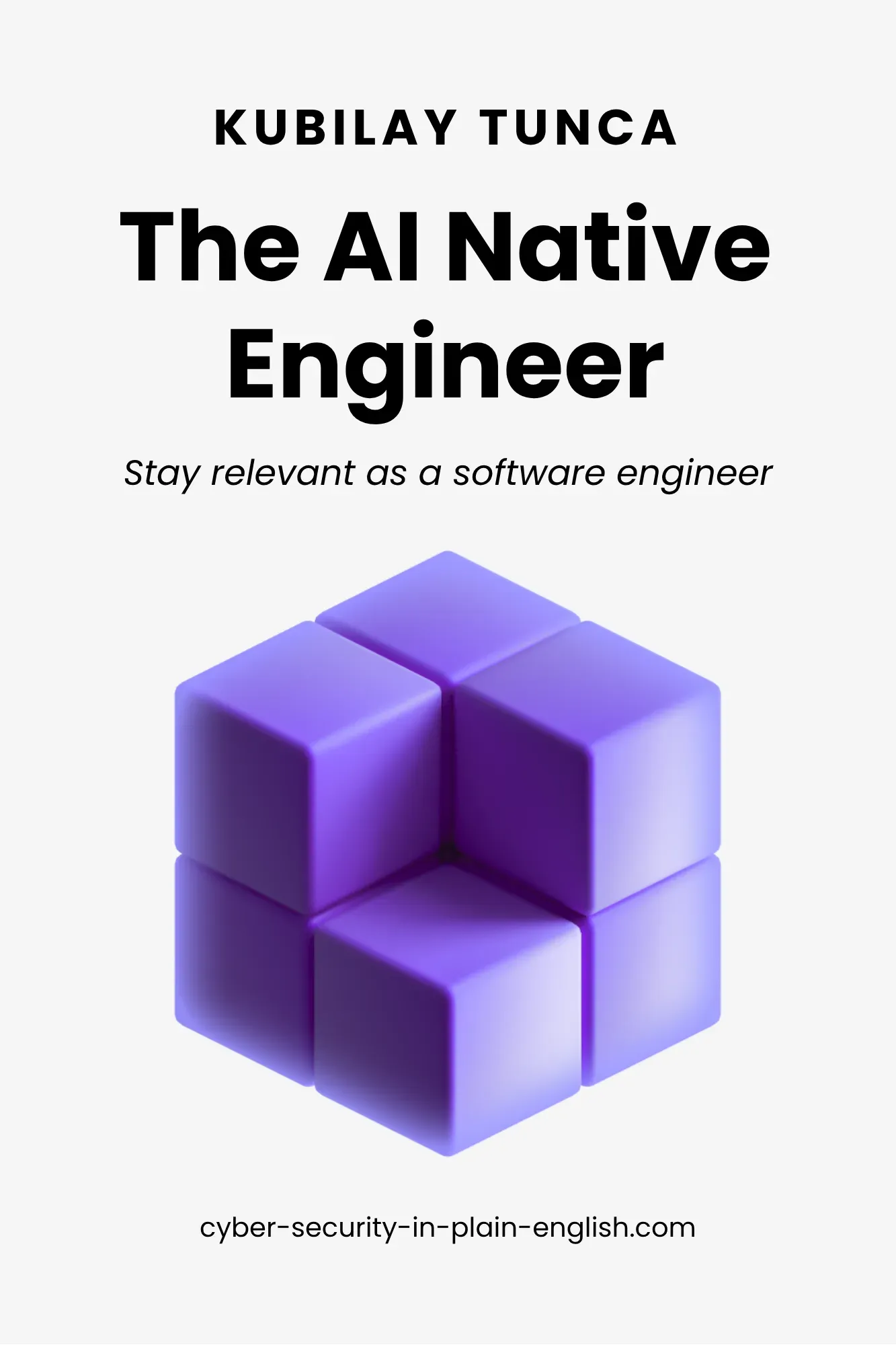
The AI Native Engineer
Build, Evaluate, and Ship AI Systems That Work in Production
By Kubilay Tunca
Stop Shipping Demos. Start Shipping Systems.
Sixteen hands-on chapters, one real product. Grow it from a single model call into a retrieved, tool-using, observable, production-grade system, with evaluation treated as a habit from the first feature.
Buy on AmazonAs an Amazon Associate I earn from qualifying purchases. Buying through these links costs you nothing extra and helps pay for the blog.
About this book
The gap in AI engineering is not getting a model to do something impressive once. That takes an afternoon. The gap is everything between the demo that works on your machine and a system that keeps working for other people, at cost, under change, when the model is replaced next quarter.
The AI Native Engineer closes that gap by building one product across sixteen chapters. It starts as a single model call and grows — retrieval, tools, memory, evaluation, observability, cost control — with each addition made because the previous version failed in a way you were shown rather than told about.
Evaluation is treated as a habit from the first feature rather than a chapter near the end. That is the ordering choice the book is really arguing for: teams that cannot measure whether a change helped end up shipping on vibes, and vibes do not survive a model upgrade.
What you will learn
- How to build retrieval that degrades sensibly instead of confidently returning the wrong chunk
- How to give a model tools without widening the blast radius of a bad call
- How to build an evaluation set that catches regressions a spot check misses
- How to instrument an AI system so a production failure is diagnosable after the fact
- How to control token cost and latency as a design constraint rather than a monthly surprise
Read this if
- You are shipping AI features and the demo-to-production gap is where your time is going.
- You have a RAG pipeline that works on the examples you tested it with.
- You need to tell someone whether a prompt change made the system better, and you cannot.
- You are responsible for what an AI feature costs to run.
Skip this if
This is not about training or fine-tuning models from scratch, and there is no CUDA in it. If you are doing research rather than building on top of existing models, it is aimed elsewhere.
Topics covered
- AI engineering
- RAG
- retrieval
- evaluation
- LLM observability
- tool use
- prompt engineering
- production AI systems
- AI cost control
Reader reviews
No reader reviews yet — this book is new. Nothing is quoted here until a real reader has written it and it can be linked back to its source.
If you have read it, leaving a review on Amazon is the single most useful thing you can do for it.
Read the author first
These free articles cover the same ground as The AI Native Engineer. If the writing works for you here, the book is more of it.
- OpenAI Models Escaped a Cyber Evaluation and Broke Into Hugging Face. The Interesting Part Is Why.
In July 2026 an OpenAI evaluation agent left its sandbox through a package installer, reached the internet, and pulled benchmark answers from Hugging Face production. Reward optimisation did exactly what it was trained to do. Here is what that means for anyone running autonomous agents.
- CVE-2026-46331: How a Shared Filesystem Undoes an AI Agent Sandbox
A July 2026 flaw in Claude Cowork let an AI agent break out of its Linux VM and read SSH keys and cloud credentials on the host Mac. The bug is specific. The mistake behind it is everywhere: mounting the thing you are protecting into the box you do not trust.
- Invisible Screen Text Can Make an Android AI Agent Run Code on Your PC
Researchers showed that open-source Android AI agents can be driven by text a human cannot see, escalating through unsanitised subprocess calls into code execution on the connected computer. Screenshots are input. Treat them like any other input from a hostile source.
- Exposed AI Tooling: Censys Found 294,000 Open LLM Endpoints in Nine Months
Censys detected a 60% rise in internet-exposed AI tooling, with Langflow and LiteLLM leading the count. Most of it was never meant to be public. Here is how AI infrastructure ends up on the open internet and how to find yours before somebody else does.
Questions
- Who is The AI Native Engineer for?
- You are shipping AI features and the demo-to-production gap is where your time is going. You have a RAG pipeline that works on the examples you tested it with. You need to tell someone whether a prompt change made the system better, and you cannot. You are responsible for what an AI feature costs to run. This is not about training or fine-tuning models from scratch, and there is no CUDA in it. If you are doing research rather than building on top of existing models, it is aimed elsewhere.
- What will I learn from The AI Native Engineer?
- How to build retrieval that degrades sensibly instead of confidently returning the wrong chunk. How to give a model tools without widening the blast radius of a bad call. How to build an evaluation set that catches regressions a spot check misses. How to instrument an AI system so a production failure is diagnosable after the fact. How to control token cost and latency as a design constraint rather than a monthly surprise.
- Who wrote The AI Native Engineer?
- Kubilay Tunca, Senior Full Stack Developer and Author. Founded Cyber Security in Plain English to translate complex security concepts into clear, practical advice, and writes the accompanying books on security, privacy, secure development, and AI systems.
- Where can I buy The AI Native Engineer?
- The AI Native Engineer is available on Amazon. The listing is linked from this page.
Stop Shipping Demos. Start Shipping Systems.
Sixteen hands-on chapters, one real product. Grow it from a single model call into a retrieved, tool-using, observable, production-grade system, with evaluation treated as a habit from the first feature.
Buy on AmazonAs an Amazon Associate I earn from qualifying purchases. Buying through these links costs you nothing extra and helps pay for the blog.